
'Indian diplomacy in West Asia under the present government has been a success story -- and with Saudi Arabia in particular,' says Ambassador M K Bhadrakumar.

The US has been, historically, a sleeping partner in India-China relations. Today, any attempt by the Modi government to make a bilateral move to improve relations with Beijing could upset Biden's apple cart, notes Ambassador M K Bhadrakumar.
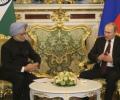
In a clear attempt to allay Russia's apprehensions, Prime Minister Manmohan Singh on Monday said it will remain an "indispensable" partner for India's defence needs even as he underlined that the bilateral ties should adapt to changing times to address challenges.
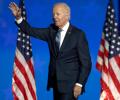
'The hardliners in Delhi are in for a big disappointment,' predicts Ambassador M K Bhadrakumar.
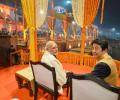
'Modi and Abe are working seriously for India-Japan bonhomie to grow stronger.' 'It is a win-win situation for both countries and the future look promising,' says Rajaram Panda, the Indian Council for Cultural Relations India Chair Visiting Professor at Reitaku University, Japan.

'Any fear or apprehension that this dialogue is aimed towards China, that is mistaken.'

"The basic idea is that India would like to continue to be the most beautiful woman wooed by all men, notably the two strongest in the house, US and China," the article titled 'Indo-US strategic distrust stalls LSA signing'.

This is the joint statement issued by the ministry of external affairs on the visit of US President Barack Obama to India.

With the situation in Ladakh tense and no resolution in sight the trigger to take the India-US relationship to a transformational one is already there, observes Lieutenant General Syed Ata Hasnain (retd).
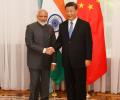
'The fact that Modi and Xi exuded confidence to accelerate the negotiations for a border settlement alone underscores that the Russia-India-China triangle has become very dynamic,' notes Ambassador M K Bhadrakumar.

India and China on Tuesday discussed the recent spate of incursions and ways to maintain peace and tranquility along the Line of Actual Control in the border areas.
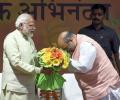
The Bharatiya Janata Party's landslide victory in state polls has "implications" for the Sino-India ties as it could further embolden Prime Minister Narendra Modi's "hard-line attitude" and pose difficulties for "compromises" in rows with countries like China, official Chinese media commented on Thursday.

A day after North Atlantic Treaty Organisation forces transferred security responsibilities to Afghan authorities, the United States has said will continue to work with India, Pakistan and Afghanistan to further strengthen the regional security.

India has a 'natural global partnership' with US, says PM.

In an angry reaction to US Defence Secretary Ashton Carter's remarks that "China's actions could erect a Great Wall of self-isolation" in the South China Sea, Chinese foreign ministry spokesperson Hua Chunying told media that "Carter's remarks reflected typical American style thinking and hegemony".

Possible US envoy says India must get assurance against China.
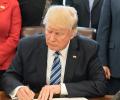
India needs to consider whether the Donald Trump administration can actually deliver, observes former foreign secretary Shyam Saran.

'We have a common way of looking at the world, a common way of thinking, and a common set of values that predispose us to be partners. And our interests overlap greatly,' Dr Ashton B Carter, America's next defence secretary, told Aziz Haniffa/Rediff.com in an exclusive interview.

Asked if the relationship has achieved its full potential, the President replied, "Absolutely not."

With PM Modi's visit, the time has come for a relook at India-Myanmar ties, and elevate the relationship to higher levels, says Dr Rahul Mishra.

Prime Minister Narendra Modi on Sunday discovered a "special connection" with Mongolia when he entered the Buddhist country's Parliament to deliver a speech, the first foreign leader to do so on Sunday -- a holiday.
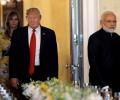
'China was the elephant in the Oval Office and Trump would have sensed that Modi's foreign policy architecture has become disoriented sans the US' pivot to Asia,' points out Ambassador M K Bhadrakumar.
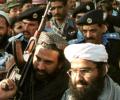
Swaraj took up the issue with Wang at a bilateral meeting in Moscow on the sidelines of the Russia-India-China trilateral meeting of their foreign ministers.

Even as the United States snuggles closer to India with the thinly veiled objective of containing China, the Indian strategy is to avoid alienating either nation.

'While economic ties are making incremental progress, it is in the security and strategic domains that the India-Japan synergy is more compelling,' says Dr Rajaram Panda.

'Modi's promise of change during the election campaign was on the domestic front, but his first year in office focused on foreign policy beyond all expectations,' says Ambassador T P Sreenivasan.

The Trump regime has informed the Congress that it 'strongly supports' transfers of F-18 and F-16 fighter proposals put forth by Boeing and Lockheed Martin respectively.

Vietnam is a key player in India's act east policy under Prime Minister Narendra Modi. From India's perspective, a strategic partnership with Vietnam will only deepen political, economic, and security ties and be a bulwark against China, say Melissa S Hersh and Dr Ajey Lele

Australia's Prime Minister Tony Abbott on Friday said he will sign an agreement with India to sell uranium for non-weapon use. "Prime Minister Modi and I will today sign a nuclear cooperation agreement that will finally allow Australian uranium to India," he said while addressing a meeting, organised by industry chambers including CII and Ficci.

Both have been robustly muscular leaders who began as immensely charismatic politicians conveying an impression that they were makers of history, raring to go. Both have been hyperactive on the world stage. But in the final analysis, Abe is departing on a sombre note, unceremoniously and apologetically, observes Ambassador M K Bhadrakumar.

With Donald Trump the appeal has to be to his business instincts in which his personal interests seem to play a significant role, says former foreign secretary Kanwal Sibal.

Prime Minister Narendra Modi's opinion piece in Canada's The Globe and Mail focuses on commercial cooperation in the civil nuclear energy sector.

Moving ahead with their new mantra -- Chalein Saath Saath: Forward Together We Go -- Prime Minister Narendra Modi and United States President Barack Obama on Tuesday vowed to deepen cooperation in every sector for the benefit of global stability and people's livelihoods over the next ten years.

Considering Modi's style of practicing diplomacy, it is likely that a clear message would be conveyed to China that it is high time Beijing stops using its good relations with Pakistan as a pressure tactic against India. This is imperative not only for strengthening India-China relations at the bilateral level but also for maintaining stability at the regional level, says Sana Hashmi.

'The question remains: Was the Obama visit truly a success? Only the future will tell us if the "breakthrough" in the nuclear liability issue will concretise into electricity.' 'As importantly, it will be interesting to watch how India's relations with China will evolve in the months to come.'

'By the time he came out after nearly five hours, he had a one-to-one conversation with the President, a delegation-level meeting, a reception, a dinner, a tour of the White House and a joint statement of a kind none of his predecessors ever had,' says Ambassador T P Sreenivasan.

US Congresswoman Tulsi Gabbard, newly elected co-chair of the influential Congressional Caucus on India and Indian-Americans, discusses her vision for US-India ties with Rediff.com's Monali Sarkar.
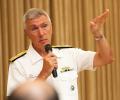
Admiral Samuel J Locklear III, Commander of the US Pacific Command, has not ruled out militants fighting in Afghanistan today switching their attention back to Kashmir post-US and NATO withdrawal of its troops from Afghanistan, and expressed concern over the recent terrorist attacks across the Line of Control that has exacerbated tensions between India and Pakistan.

Prime Minister Narendra Modi on Tuesday said Australia will not be at the periphery of India's vision but at the centre of its thought, as he called for closer bilateral security cooperation and a comprehensive global strategy to tackle the menace of terrorism.

Thinking big, China is changing the world order; with mixed priorities, we can but tag along, writes T J S George.
